
The Cinderella Marketing Bracket: When the Underdog Wins
Every March, the world loses its mind over Cinderella stories: A team nobody believed in, a scrappy group from a small school that just kept winning, the moment the bracket buster becomes the bracket.
At Red Cat Marketing, we've been watching the same thing happen in marketing. The big-budget favourites show up year after year with their TV commercials and mega influencer deals and every year, a scrappy underdog tactic walks onto the court and sends them home early.
This year, we made it official. Welcome to the Cinderella Marketing Bracket 2026.
Round of 16: The Upsets Begin
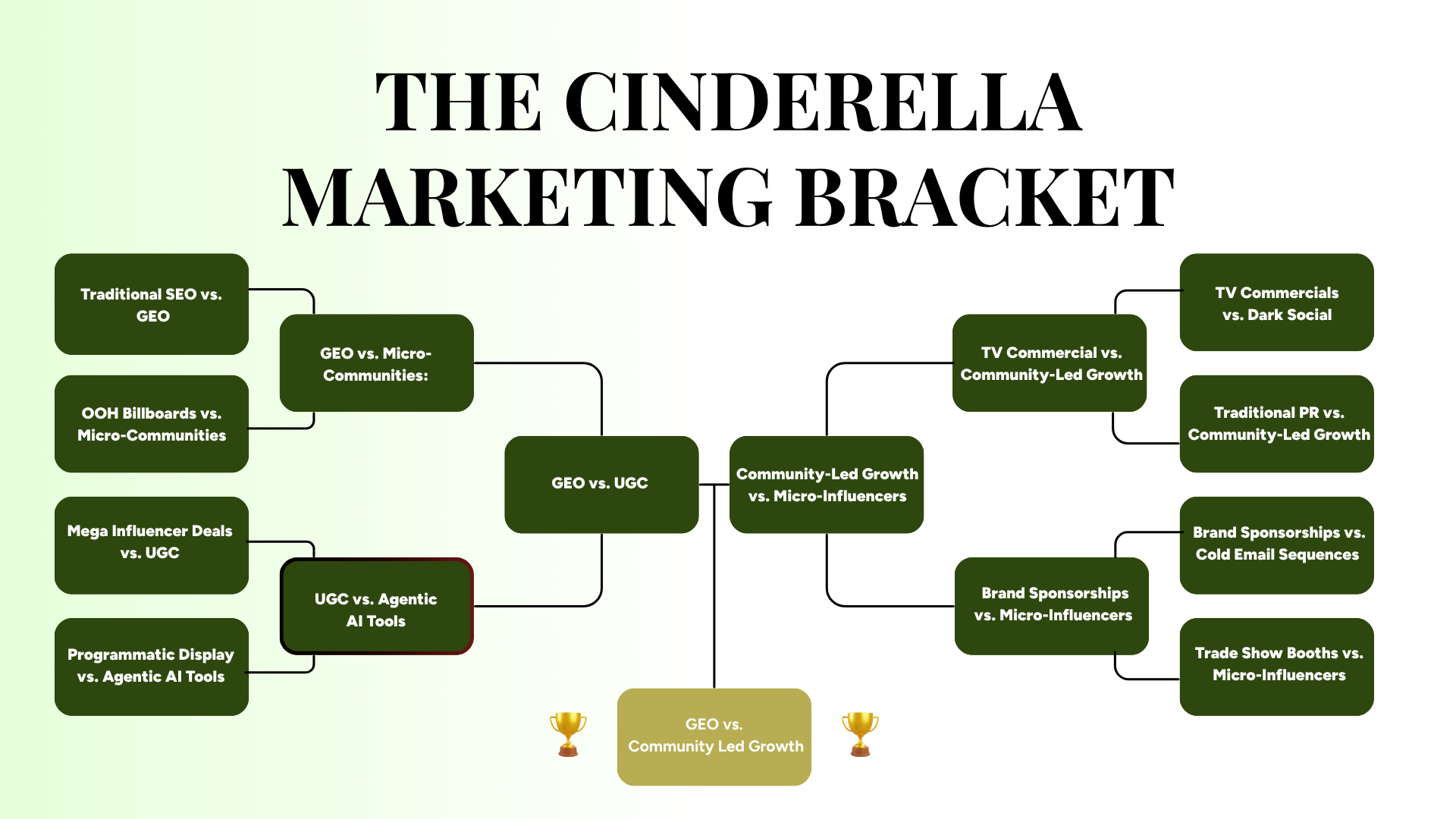
1. Traditional SEO vs. 16. GEO ⭐ Search has evolved. From typing keywords into a search bar to having a full on conversation with AI. Traditional SEO has been the foundation of organic visibility for as long as we can remember, using backlinks, keywords, and on page optimization to help websites appear in front of their audience. But GEO, Generative Engine Optimisation, the art of making your brand visible inside AI-powered search results like ChatGPT and Perplexity, just took discovery to another level. This isn’t about replacing SEO, but rather expanding it to where visibility means being seen and recommended by AI. The fundamentals are still the same, but they’re now being powered by something bigger. GEO wins. The crowd goes wild.
8. OOH Billboards vs. 9. Micro-Communities ⭐ Billboard budgets are still massive, and yes, a great OOH placement can certainly turn heads. But Micro-Communities, tight, trusted online groups built around shared passions, create the kind of word-of-mouth that no billboard ever could. When your brand earns a place in a community people actually care about, trust transfers instantly. Micro-Communities take it.
5. Mega Influencer Deals vs. 12. UGC ⭐ A mega influencer deal costs six figures, takes months to negotiate, and produces one piece of content your audience knows is paid. User-Generated Content from real customers sharing real stories with real enthusiasm, costs almost nothing and converts like crazy. In many cases, influencer campaigns can actually spark waves of UGC, as audiences begin creating their own content in response to their favourite influencers. But in the end, UGC is the ultimate Cinderella. It pulls off the upset in a blowout.
4. Programmatic Display vs. 13. Agentic AI Tools ⭐ Programmatic display has been the workhorse of digital advertising for a decade. But Agentic AI tools like AI that autonomously handles campaign scheduling, audience segmentation, email sequencing, and reporting, are doing more, faster, for a fraction of the cost. In reality, these tools can work to enhance programmatic efforts by optimizing, targeting, and bidding in real time. Overall, efficiency beats volume. Agentic AI tools advance.
2. TV Commercials vs. 15. Dark Social ⭐ TV Commercials survive… but only just. Dark Social (those unmeasurable shares via DMs, WhatsApp, Slack, and private groups) is where a huge chunk of real brand conversations are actually happening. You just can't see it. This one goes to OT, and TV squeaks through on name recognition alone. Dark Social is eliminated, but leaves a mark.
7. Traditional PR vs. 10. Community-Led Growth ⭐ Traditional PR has been the long standing go-to for earned media. From press releases, media placements, and headline coverage, when it works, it delivers huge credibility and reach. PR can definitely help accelerate community growth as it brings initial attention that draws people into your space. But Community-Led Growth is a different game entirely. Instead of chasing headlines, it’s about building an audience that genuinely engages with and advocates for your brand. Communities generate ongoing conversations, peer-to-peer recommendations, and referrals that compound over time. While PR can create great moments of attention, communities keep that momentum going. Upset complete.
3. Brand Sponsorships vs. 14. Cold Email Sequences ⭐ Big brand sponsorships with stadium naming rights, jersey logos, event tie-ins, and all, look impressive on a press release. But a sharp, personalized cold email sequence with the right targeting and the right message will generate more qualified leads for less than a rounding error on a sponsorship budget. Cold Email Sequences nearly pull the upset... but Brand Sponsorships hold on by a thread.
6. Trade Show Booths vs. 11. Micro-Influencers ⭐ Trade show booths cost tens of thousands of dollars, attract people, and generate a pile of business cards that live in a drawer forever. Micro-influencers with 5,000 to 50,000 niche followers have genuine trust with their audience and drive real purchasing decisions. It's not even close. Micro-Influencers advance.
The Elite Eight: All Underdogs, All Business
By the quarterfinals, the brackets are almost completely filled out. The big-budget favourites are heading home, and the scrappy upstarts are running the floor.
GEO beats Micro-Communities: Both are incredible, but GEO is changing the entire discovery landscape. If a brand is visible in AI search, it’s already ahead of the curve. Mico-communities still drive loyalty and depth, but GEO determines whether a brand is even discovered at all. Brands that crack AI search now will own long-term visibility.
UGC beats Agentic AI Tools: AI tools are powerful, but they can't replace authentic human content. User-generated content feels genuine, builds trust, and connects your audience in a way that automated outputs aren’t capable of. The best approach uses AI to support creation, while letting your customers be the best marketers.
Community-Led Growth beats TV Commercials: Big-budget ads can generate awareness and short-term buzz, but communities are driving the momentum. When users are engaged and invested, they advocate, share organically, and compound growth over time in a way commercials can’t. The big-budget tactic falls. Community wins.
Micro-Influencers beat Brand Sponsorships: Smaller creators have higher trust and stronger engagement with their audiences. Their recommendations come across less like a sales pitch and more like a friend sharing their personal suggestions. In many cases, multiple partnerships with small influencers outperform a single large sponsorship alone. Trust at scale consistently beats scale without trust. Every time. Micro-Influencers take this one.
Final Four
GEO vs. UGC: Two underdogs, one spot. GEO represents where discovery is going; UGC represents what converts when people get there. GEO takes the semi in a nail-biter. Getting found comes before getting chosen.
Community-Led Growth vs. Micro-Influencers: The ultimate Cinderella matchup. Two tactics that are all about trust, not budget. Community-Led Growth edges through. Building your own community means you never have to rent someone else's.
🏆 The Champion: Community-Led Growth 🏆
The Cinderella story ends with the biggest upset of all. Our champion, beating out Generative Engine Optimization, is Community-Led Growth.🏆
Community-Led Growth: The strategy of building a genuine, loyal audience that advocates for your brand, buys from you repeatedly, and tells their people about you is declared the winner of the whole tournament. GEO is powerful for visibility, but it depends on external algorithms, while community builds something you fully own that doesn’t require a massive budget and won’t disappear as soon as the system changes. It compounds over time, getting more valuable the longer you invest in it.
The best part? Most big brands still aren't doing it well. Which means right now, in 2026, it's still an underdog play… and that's exactly where the smart money is.
At Red Cat Marketing, we help brands build the kind of marketing that doesn't need a Super Bowl budget to win. Just the right strategy, the right tactics, and the right team.
Ready to back the underdog? Let's talk.